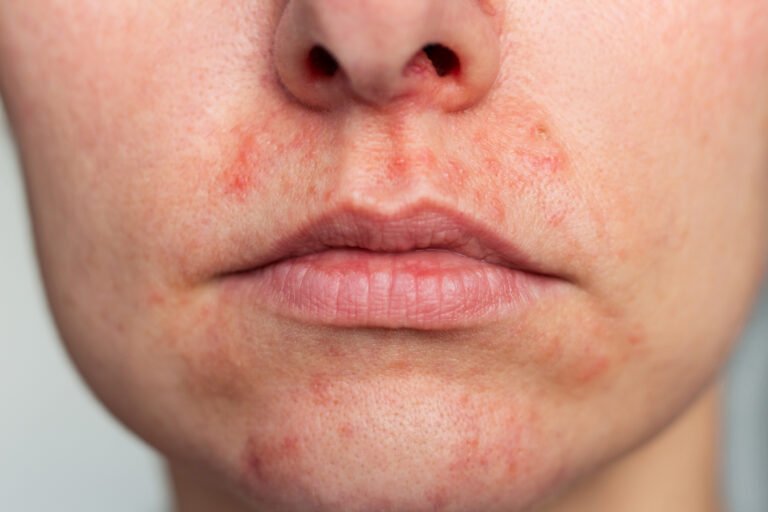
In dermatology, there’s a phase where healing looks exactly like a breakout. Most people quit right there.
You started a new retinoid two weeks ago, full of hope. Now your skin looks worse than before you began — more spots, more small bumps, and a creeping certainty that you’ve made everything worse. Before that expensive tube goes in the bin, there’s something most dermatologists wish you knew: this exact moment is where most people abandon a treatment that was about to work.
If you’ve wondered whether your skin is purging or simply reacting badly, you are not alone. The confusion between skin purging vs. breakout is one of the most common reasons people quit effective skincare in the first few weeks, often days before the turning point. The good news is that the difference is real, it follows recognizable patterns, and once you can read those patterns, you’ll know whether to stay the course or step back.
What “Purging” Actually Means
Let’s clear up the term first, because it gets thrown around loosely online. Purging isn’t a formal medical diagnosis — it’s the everyday name for the early adjustment phase that certain active ingredients trigger. The mechanism is straightforward: ingredients that speed up skin cell turnover push congestion that was already forming beneath the surface up and out faster than usual.
Here’s the key idea. Microcomedones — tiny clogs that were quietly developing under your skin — would normally take weeks to surface as visible spots. When you introduce an ingredient that accelerates turnover, that timeline compresses. Spots that were going to appear anyway simply arrive sooner, often in a cluster that feels alarming. It looks like the product caused new breakouts, but in most cases it revealed what was already on its way.
It looks like the product caused new breakouts — but it usually revealed what was already on its way.
This is why purging has a logic to it. It shows up in your usual problem areas, it involves the kind of acne lesions you already get and — critically — it improves with continued use rather than worsening. A true reaction follows the opposite pattern.
If your skin is breaking out in ways that don’t fit this picture, a dermatologist can help you figure out what’s actually happening before you waste months on the wrong approach.
Give a new retinoid 12 weeks before you judge it. Most people quit during the very weeks it’s still working.
Based on standard dermatology guidance on assessing retinoid treatment response.
“If a new product breaks me out, my skin is rejecting it — I should stop immediately.”
A temporary rise in familiar breakouts, in your usual areas, is often purging — the product working, not failing.
True rejection looks different: it itches, burns, or spreads where you never applied it.
Push through, or stop? Your personalized report is the part that answers that.
Join the WaitlistSkin Purging vs. Breakout: Which Ingredients Trigger Which
Not everything can cause purging — and this single fact resolves a surprising number of cases. Only ingredients that accelerate cell turnover can trigger it.
This is one of the most useful filters you have. If your skin “breaks out” after starting a hydrating serum, a niacinamide product, or a sunscreen, that is not purging — these don’t speed up turnover, so there’s nothing to push to the surface. A reaction to one of these usually points to irritation or a formula that doesn’t agree with your skin, not an adjustment phase to wait out. If you’re also dealing with persistent breakouts, our guide to adult acne covers the full picture.
When purging is the likely explanation, three things tend to line up: the breakouts appear in areas you normally break out, they start within the first few weeks of a new active, and the skin between lesions feels normal — not raw, burning, or itchy. Beyond that point, the specifics of what to do next depend heavily on your skin type, the strength of your active, and what else is in your routine — which is exactly the kind of decision a dermatologist-guided plan is built for, rather than a one-size-fits-all rule from a video.
In the first few weeks of an active — especially anything with a retinoid — some irritation is common, and a mild, temporary rise in breakouts is a normal part of the skin adjusting. It isn’t a sign the product is wrong for you.
What matters most in this window is managing the irritation rather than fighting it: ease the frequency if your skin is tender, keep a simple moisturizer in the routine to support the barrier, and never skip sun protection — actives leave skin more vulnerable to UV. Get those two right, and most people get through the adjustment phase without trouble.
You’ve read the science. You still don’t know what your skin needs.
A personalized assessment reads your skin, routine, and actives together — and gives you a clear answer.
Reserve My SpotHow long does skin purging last?
For most people, purging resolves within 4–6 weeks. If your skin is still getting worse at week 8, that’s a signal to reassess rather than push through — a dermatologist can help you figure out whether to adjust your routine or try a different approach.
Can niacinamide or hyaluronic acid cause purging?
No. Neither ingredient speeds up cell turnover, so there’s nothing to bring to the surface. If you break out after starting one of these, it’s more likely irritation or a pore-clogging formula — not purging. That distinction matters for what you do next.
Should I stop my retinoid if my skin is purging?
Usually not — if the signs point to purging (familiar spots, usual areas, no burning or swelling), the more effective move is to continue at a lower frequency rather than stop entirely. What that looks like depends on your skin type and the strength of your product, which is where a personalized plan makes a real difference.
How can I tell purging from an allergic reaction?
Purging shows up where you normally break out, starts within the first few weeks, and the skin between spots feels normal. A reaction can appear anywhere — even where you didn’t apply the product — and brings itching, burning, or swelling. If you see hives or any swelling of the face, stop the product and see a dermatologist.
How do I minimize purging when starting a new active?
Start 2–3 times a week, use a pea-sized amount, and introduce one new active at a time. A simple moisturizer helps support the barrier during the adjustment phase, and daily sun protection is non-negotiable — actives leave skin more vulnerable to UV. Avoid DIY fixes like lemon juice or baking soda; they damage the barrier and make things worse, not better.
Reviewed by a practicing dermatologist with 15+ years of clinical experience. All content checked against current AAD and EADV guidelines before publication. About our editorial standards →
Medical Disclaimer: This content is for informational and educational purposes only and does not constitute medical advice, diagnosis, treatment, or a substitute for professional dermatological care. If you have a persistent, changing, or concerning skin condition, please consult a dermatologist.