Evidence-Based · Dermatologist-Reviewed · Sponsor-Free
Reviewed by Our Resident Dermatologist · Updated May 2026
Most people wearing SPF 50 are actually getting closer to SPF 7 protection. The issue isn’t the formula, but the dose. In this dermatologist sunscreen guide, I break down the clinical reality of SPF testing, the illusion of high numbers, and the application gap that quietly costs years of skin health. No brand alignments. No marketing panic. Just the protocol.
of UV radiation still reaches your skin on overcast days — clouds block only the remaining fraction.
Sunscreen is a daily requirement, not a beach-day accessory.
What SPF Actually Measures — A Dermatologist Sunscreen Guide
SPF — Sun Protection Factor — measures one thing: how well a formula blocks UVB rays. UVB causes sunburn and is the primary driver of squamous cell carcinoma and melanoma. But UVB is only part of the UV equation.
UVA radiation reaches Earth in quantities 10 to 100 times greater than UVB. It penetrates to the dermis, drives collagen breakdown, pigmentation disorders, and photoaging — and critically, it passes through glass and clouds. The number on your sunscreen bottle tells you nothing about UVA protection.
UV radiation penetration depth — UVB stops at the epidermis; UVA reaches the dermis where collagen and elastin live.
This is why broad spectrum is not optional. In the US, FDA broad spectrum designation requires a minimum UVA/UVB protection ratio. In Europe, the UVA circle logo means UVA protection is at least one-third of the SPF value. In Asia, the PA system (PA+ through PA++++) rates UVA directly.
The SPF Math: What the Numbers Actually Mean
| SPF | UVB Filtered | UVB That Reaches Skin | Daily Use |
|---|---|---|---|
| 15 | 93.3% | 6.7% | Minimum — low exposure only |
| 30 | 96.7% | 3.3% | Sufficient for most daily use |
| 50 | 98% | 2% | ✓ Recommended — wider margin for error |
| 100 | 99% | 1% | Marginal gain — often false security |
The jump from SPF 15 to SPF 30 is a genuine 3.4% improvement. From SPF 30 to SPF 50: 1.3%. From SPF 50 to SPF 100: another 1%. The reason most dermatologists recommend SPF 50 over SPF 30 is not the filtration math — it’s the error margin. Most people apply less than half the tested amount. At half the dose, SPF 50 performs like SPF 7.
Three Myths That Quietly Damage Skin
I don’t need sunscreen today — it’s cloudy.
evidence
Clouds block only about 20% of UV radiation.
The remaining 80% reaches your skin regardless of visible sky. Daily application is non-negotiable.
I work indoors — glass protects me.
evidence
Glass blocks UVB, but UVA passes straight through.
UVA — the photoaging and pigmentation driver — passes through standard glass unimpeded. Office windows, car windows, and daily commutes all add up to cumulative exposure over years.
A tan is healthy — it means my skin is adapting.
evidence
Any tan is a visible sign of DNA damage.
Melanin production is the skin’s emergency response to UV injury. Tanning beds are classified as a Group 1 carcinogen by the WHO — the same category as tobacco.
General SPF advice is a starting point. Your skin needs a specific protocol.
GET ON THE WAITLISTMineral vs. Chemical Sunscreen: The Clinical Decision
Both categories work. The choice should be based on skin type, lifestyle, and specific concerns — not marketing.
Mineral filters (zinc oxide, titanium dioxide) are the only two sunscreen ingredients currently designated as GRASE — Generally Recognized as Safe and Effective — by the FDA as of 2023. Zinc oxide provides the broadest single-ingredient UVA and UVB coverage. Titanium dioxide covers primarily UVB and UVA2.
Chemical filters absorb UV energy and convert it to heat. They tend to be cosmetically lighter — easier to blend, no white cast — which meaningfully improves adherence. Some chemical filters can trigger flushing in rosacea-prone skin.
| Situation | Mineral | Chemical | Notes |
|---|---|---|---|
| Pregnancy | ✓ Preferred | Use with caution | Zinc oxide eliminates systemic absorption concern |
| Children | ✓ Preferred | Not ideal under 6mo | Under 6 months: shade + clothing only |
| Rosacea | ✓ Preferred | May trigger flushing | Chemical filters can activate TRPV1 |
| Post-procedure | ✓ Preferred | May irritate | After laser, peels, microneedling |
| Daily city use | Fine | ✓ Better adherence | Lighter texture improves daily compliance |
| Melasma / PIH | ✓ Tinted mineral | Standard not enough | Iron oxide required — see note below |
Which SPF for Your Skin Type
Melanoma in darker skin types is diagnosed later and carries a worse prognosis. Skin tone is never a reason to skip SPF.
The Application Gap: Why Your SPF Isn’t Working
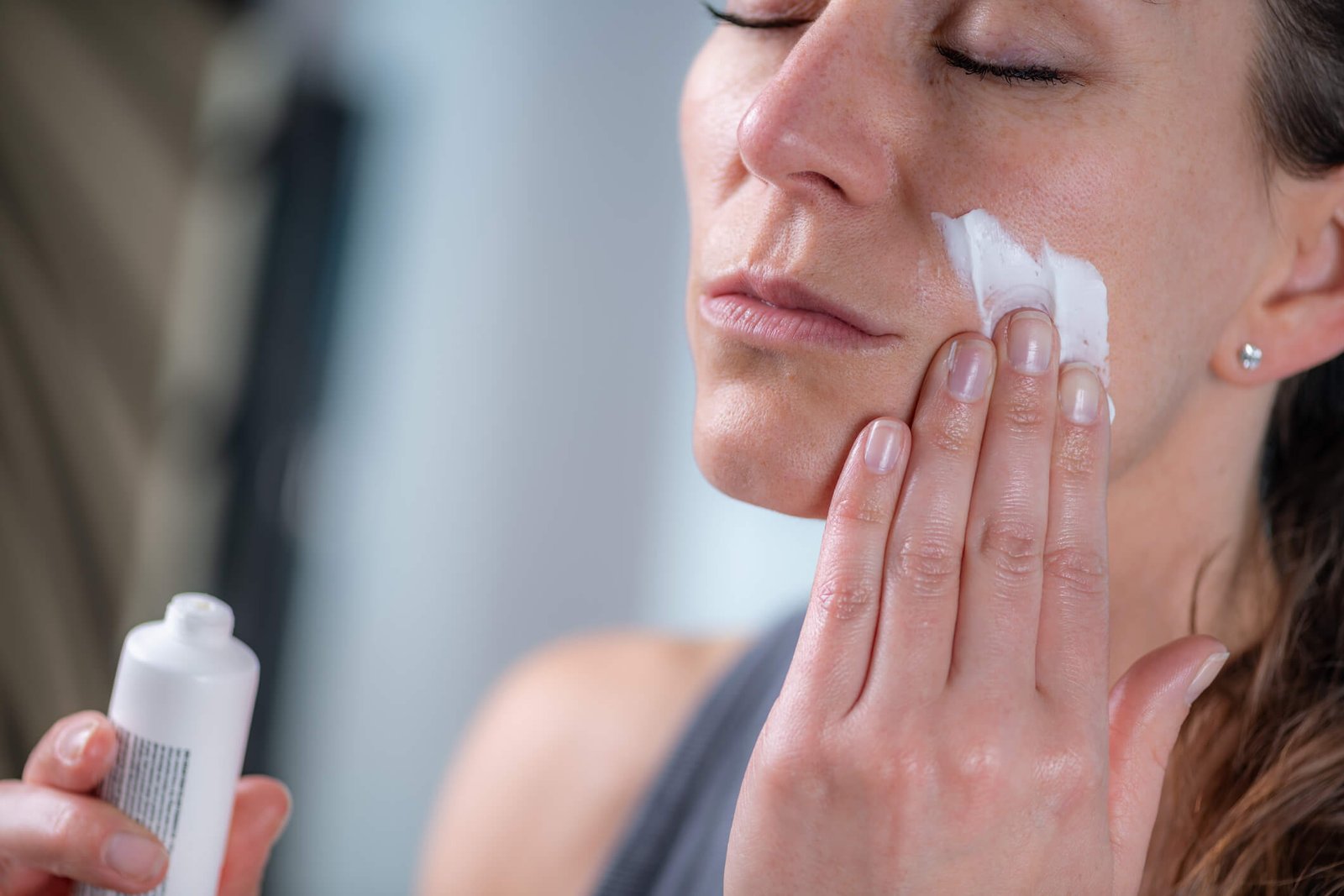
SPF testing uses 2mg per square centimeter of skin. For the face and neck, that’s approximately ¼ teaspoon — or squeeze product along the length of two fingers. That’s the two-finger rule, and it’s a clinical standard.
Most people apply between ¼ and ½ of the tested amount. At half the dose, SPF 50 performs closer to SPF 7. This is the most common reason sunscreen fails — nothing to do with the formula.
Reapplication: Every two hours of active UV exposure, regardless of SPF value. Higher SPF does not extend duration — it provides a larger buffer for under-application. After swimming or sweating, reapply when the labeled water-resistance window closes (40 or 80 minutes).
Commonly missed areas: Ear cartilage, back of neck, dorsal hands, tops of feet, scalp (spray or stick), and lips (SPF lip balm). These are sites where skin cancers are regularly found.
The vitamin C synergy: Topical vitamin C (10–20% L-ascorbic acid) applied under sunscreen neutralizes free radicals that bypass the SPF filter — a mechanism separate from UV absorption. Studies suggest approximately 4% additional photoprotection. Sequence: vitamin C serum → sunscreen → makeup.
The most common question I get in practice is “which sunscreen should I use?” My answer is always the same — all SPF 50 formulas block roughly the same amount of UV. What changes is the vehicle, not the protection.
Oily or acne-prone skin needs a lightweight fluid or gel. Rosacea patients often react to chemical filters — mineral zinc oxide is the safer call. Dry skin benefits from a cream base with added humectants. Same SPF, completely different product.
One more thing on reapplication: the biggest barrier I hear is “I can’t reapply over makeup.” A sunscreen stick solves this entirely — it glides over foundation, fits in a pocket, and removes every excuse for skipping the midday reapply.
Does Sunscreen Block Vitamin D?
Theoretically, yes. In practice, studies examining regular sunscreen users have not demonstrated clinically significant vitamin D deficiency caused by sunscreen use — because most people apply insufficient amounts and miss body areas.
The AAD position is unambiguous: intentional sun exposure for vitamin D is not recommended. The skin cancer risk exceeds the benefit. The correct approach: oral supplementation. Adults 18–70: 600 IU/day. Over 70: 800 IU/day. Confirmed deficiency (25-OH-D below 20 ng/mL): therapeutic dosing under physician guidance.
You’ve read the science. You still don’t know exactly what your skin needs.
A protocol built around your skin type, pigmentation, and geography.
RESERVE MY SPOTDoes SPF in foundation count as sun protection?
Foundation is applied at a fraction of the tested SPF dose. It functions as a top-up — not a substitute for a dedicated sunscreen step applied before it.
How do I reapply SPF over makeup?
Two options work without disturbing makeup: an SPF setting spray (broad spectrum, spritzed at arm’s length) or a mineral SPF powder. Neither replaces a properly applied morning SPF, but both meaningfully extend coverage.
Which sunscreen is best for acne-prone skin?
Non-comedogenic, fragrance-free, oil-free gel or fluid formula. Lightweight chemical sunscreens tend to work best for oily and acne-prone skin. Avoid silicone-heavy textures if your skin is congestion-prone.
Is SPF 30 enough for daily use?
For moderate daily exposure and correct application, SPF 30 is adequate. The practical argument for SPF 50 is the under-application buffer — since almost everyone applies less than the tested dose, SPF 50 provides a meaningful safety margin. Fitzpatrick I–II skin types should default to SPF 50+.
Why does my sunscreen pill or not absorb?
Usually a layering sequence issue. Allow each skincare layer 60–90 seconds to absorb before applying the next. If pilling persists, switch formula type — a gel sunscreen layers more cleanly over water-based moisturizers.